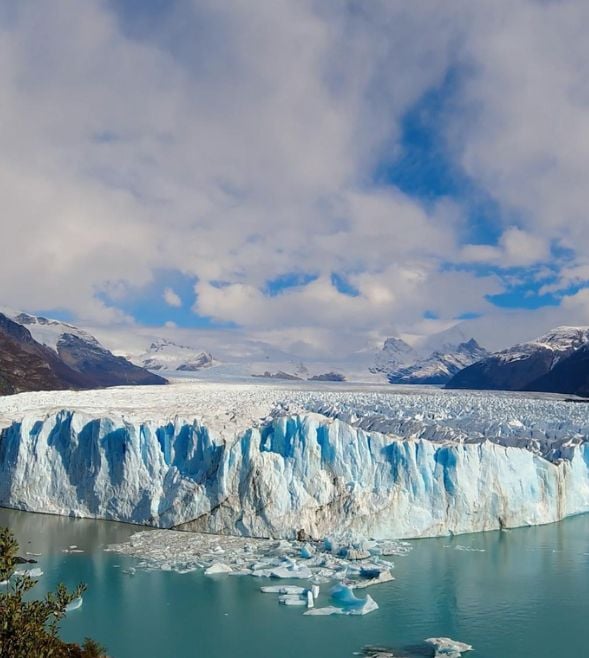
On 30 September 2010, the Senate and the Chamber of Deputies of the Nation enacted the Minimum Standards Regime for the Preservation of Glaciers and the Periglacial Environment with the aim of preserving glaciers and the periglacial environment as strategic reserves of water resources and for the protection of biodiversity.
Sixteen years later, on 8 April 2026, the National Congress approved in both chambers the bill promoted by the Executive Branch amending six articles of Law No. 26,639. This amendment redefines the scope of protected areas to enable productive activities in certain periglacial zones.
 “Argentina is the only country in the world that has regulated a specific law for the protection of glaciers,” comments Alejandro Chiappe, Partner of Advisory Services and Sustainability spokesperson at Grant Thornton Argentina. “Countries such as Canada, France, Switzerland and the United States, among others, protect glaciers through national parks or general environmental or water legislation. India is a particular case, as it granted legal personhood to two glaciers, allowing citizens to take legal action on their behalf.”
Definitions
A glacier is a permanent body of ice and snow formed on the Earth’s surface by the accumulation, compaction and recrystallisation of snow. Glaciers show evidence of downslope movement due to gravity and are composed of snow, air and debrisi transported together with the ice and within surface and internal watercourses.
According to surface cover, glaciers may be classified as “debris-free” (without cover) and “debris-covered”. There are also “rock glaciers”, which are formed from a mixture of ice and debris.
The periglacial environment does not only correspond to areas adjacent to glaciers, but is currently defined as a cold, non‑glacial climatic environment characterised by permanently frozen soils with freeze‑thaw cycles. It may or may not be in glaciated areasii. The presence of permafrostiii or gelifraction processesiv is typical in these environments.
In 2018, the Instituto Argentino de Nivología, Glaciología y Ciencias Ambientales (IANIGLA -Argentine Institute of Nivology, Glaciology and Environmental Sciences) inventoried 16,968 bodies covering 8,484 km² of glaciated surface, of which 5,769 km² are located in the Andes mountain range and 2,715 km² in the Islands of the South Atlanticv.
What does the Glacier Law regulate?
Law No. 26,639 establishes minimum standards to preserve glaciers and periglacial environments as strategic reserves of water resources and as providers of water for the recharge of river basins.
This regulation creates the National Glacier Inventory, detailing all glaciers and periglacial landforms that act as water reserves. It establishes that the inventory must be updated at intervals of no more than five years and specifies the information required for their protection, control and monitoring, such as location, surface area, morphological classification and hydrographic basin. This task is the responsibility of IANIGLA, in coordination with the national authority with environmental competence.
The law prohibits activities that may affect the natural condition or the function of glaciers and periglacial environments as strategic reserves of water resources and providers of water for hydrographic basins. It also prohibits activities involving the destruction or relocation of glaciers or periglacial landforms, or activities that interfere with their advance. “The wording of the regulation highlights the prohibition of architectural or infrastructure works, the installation of industries or the development of industrial works and activities, mining exploration and exploitation and hydrocarbon activities, but is not limited exclusively to these activities,” explains Chiappe.
Likewise, it designates as the enforcement authority the 'national body of the highest hierarchical level with environmental competence'. Currently, this body is the Subsecretaría de Ambiente de la Nación (National Under‑Secretariat of Environment), which is responsible, among other duties, for formulating actions for the conservation and protection of glaciers and the periglacial environment, preparing periodic reports on their status and on projects and activities carried out on them or within their areas of influence, supporting local jurisdictions in their monitoring, oversight and protection, and coordinating with IANIGLA the preparation and updating of the National Glacier Inventory.
“The regulation also establishes minimum penalties to be applied in cases of non‑compliance with the provisions of the law and the regulations enacted under it,” Chiappe adds. “These apply in jurisdictions that do not have a sanctions regime, and in those that do, such regime may not stipulate lower penalties.”
What are the most relevant approved amendments?
 “The new regulation refers in its wording to Articles 41 and 124 of our National Constitution, establishing that the object to be protected, prohibited activities, environmental impact assessment and competent authorities must be consistent with them,” explains Gabriel Righini, Audit Partner and Energy and Natural Resources spokesperson at Grant Thornton Argentina. “This addition reaffirms provincial sovereignty over natural resources and grants provinces greater powers and responsibilities in the protection of glacial and periglacial zones.”
“Article 41 of our National Constitution grants all inhabitants the right to a healthy, balanced environment suitable for human development and for productive activities to meet present needs without compromising those of future generations. In compliance with this article, authorities must ensure the protection of this right and safeguard the rational use of natural resources,” explains Righini.
“Article 124 establishes that provinces hold original ownership over the natural resources existing within their territories and allows them to create regions for economic development. However, to ensure that all may enjoy the rights granted under Article 41, the Nation is responsible for enacting rules establishing minimum standards for the protection of resources, and the provinces must enact the necessary rules to complement them”, he adds.
 “This change will require provincial authorities to strengthen their local regulations and reinforce their technical teams in order to meet these demands,” adds Estanislao de León, Audit Partner and Energy and Natural Resources spokesperson at Grant Thornton Argentina. “Society and companies expect provinces to be transparent when approving or rejecting projects and to show caution in preserving water resources.”
National Glacier Inventory
The new regulation amends the object to be inventoried. While the previous law required the identification of all glaciers and periglacial landforms acting as water reserves, the amendment adds the specification of those that are “strategic” and those that are “water providers for the recharge of hydrographic basins”.
“The amendment establishes that, under the precautionary principle, all will be considered objects of protection, and it will be the responsibility of the competent authorities to verify, through technical‑scientific studies, the absence of water‑related functions,” comments de León. It is also established that where a glacier or periglacial landform meeting the conditions is detected and is not included in the Inventory, the competent authorities of the jurisdiction must notify IANIGLA for its incorporation.
“It may be the case that, due to the scale of the work, scientific criteria or available technologies, IANIGLA does not identify all bodies and does not include them on the maps provided to provincial authorities, and these authorities may grant rights within a glacial or periglacial environment without knowing that the area should be protected,” explains de León. “Now, having the possibility — and the duty — to incorporate landforms into the Inventory, local authorities bear greater responsibility when approving or rejecting projects, encouraging them to carry out their own geographical analyses to determine whether protected objects under the law are present in the area.”
“The challenge for the provinces will be to complement this regulation by placing emphasis on the definition of ‘strategic’ and establishing a clear methodology for assessing water‑related functions. There may be landforms that are not relevant for large basins but are relevant for micro‑basins, which are of great value for the study of water cycles, high‑mountain ecosystems and the planning of water resource use,” reflects Chiappe. “Establishing common criteria across the different Andean provinces will benefit society, as natural resources will be equally protected, and companies, by facilitating planning.”
Prohibited activities
Under the new regulation, the prohibition remains on activities that may significantly alter the environment, its resources, ecosystem balance, or collective assets or values, negatively modifying the natural condition or water‑related functions of glaciers and periglacial landforms, including activities involving their destruction or relocation or interfering with their advance.
As in the original law, it specifically prohibits activities that release, disperse or dispose of polluting substances or elements, chemical products or waste of any nature or volume, the construction of architectural or infrastructure works except those necessary for scientific research and risk prevention, mining and hydrocarbon exploration and exploitation, and the installation of industries or the development of industrial works or activities.
“The new regulation adds a paragraph establishing that, in the case of activities not expressly prohibited, authorities are responsible for determining, through environmental impact assessments, whether the projected activities imply a significant alteration and, consequently, whether their projects may not be authorised,” explains Righini.
“These amendments respond to the demand from various industries for greater clarity, creating the conditions necessary for productive projects and infrastructure works to be developed within a regulatory framework that provides certainty and legal security, while respecting water resources and environmental protection,” concludes de León. “For example, in the case of mining, which operates under a demanding regulatory framework regarding environmental impact, the certainty that the project is not located within a protected periglacial environment provides predictability for potential investors.”
“Mining has advanced in terms of technology, planning, engineering and monitoring and can operate in mountainous areas without affecting water resources and reserves. The protection of glaciers and the periglacial environment is not incompatible with the development of productive activities, provided there is a firm decision of Nation‑Province cooperation to establish clear regulatory frameworks, and cooperation between jurisdictions and companies to preserve the environment while promoting employment generation and economic development,” de León concludes.
Next steps
On April 24, the Executive Branch, through Decree 271/2026, enacted Law No. 27,804, the Minimum Standards for the Protection of Glaciers and the Periglacial Environment. Thus, the provisions contained in the text approved by Congress entered into force, and the provinces must enact the corresponding regulations for its implementation.
Following its enactment, the Federal Court of Río Gallegos granted an injunction sought by the city of El Calafate and suspended the application of the new Glacier Law throughout the province of Santa Cruz. Until the dispute is resolved, the injunction maintains the minimum protection standards of the original law, reaffirming that, in environmental matters, prevention must prevail over any attempt to weaken regulations.
i. Debris: residue resulting from the decomposition, erosion or fragmentation of rocks.
ii. Glaciated zone: area covered by glaciers and periglacial landforms.
iii. Permafrost: Layers of soil, rock or sediments that remain frozen at 0 °C or below for at least two consecutive years.
iv. Gelifraction: Geomorphological phenomenon involving rock fragmentation caused by the freezing of water that penetrates rocks.
v. IANIGLA-CONICET. Mayo 2018. Inventario Nacional de Glaciares. https://www.glaciaresargentinos.gob.ar/wp-content/uploads/resultados_finales/informe_resumen_ejecutivo_APN_11-05-2018.pdf